Why Teach Multifamily Development: The Case for Practitioner-Led Training
Teaching multifamily development matters because execution risk, not the spreadsheet, decides which deals close. The operators who have carried a project through construction are the ones who can teach that gap honestly.
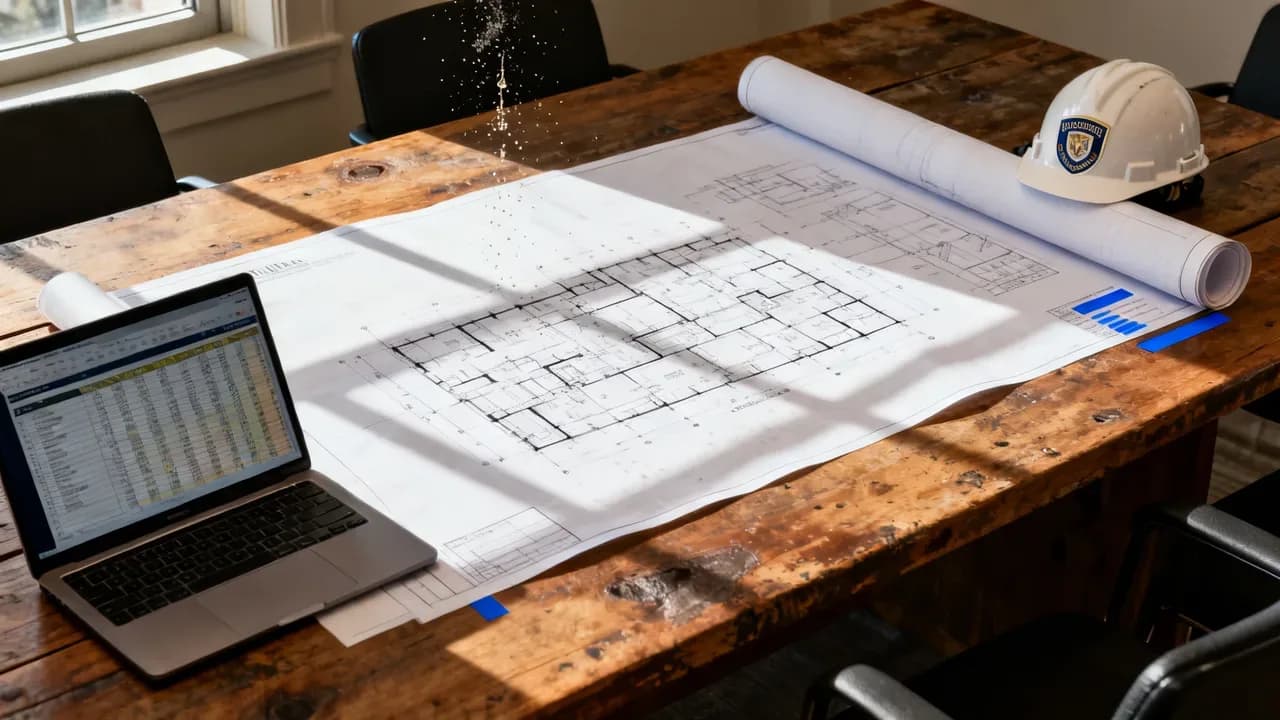
Teaching multifamily development is how the field stays honest, because the people who build the housing supply should be the ones training the next ones. A pro forma is a hypothesis. The only person who can teach a student where that hypothesis breaks is someone who has watched it break on their own deal, with their own capital, on a Tuesday afternoon when the concrete truck is already on site. That is the whole argument, and it is why I teach.
What Teaching Multifamily Development Actually Requires
Teaching multifamily development means transferring judgment about execution risk from someone who has carried it to someone who has not yet.
The concept gets confused with two adjacent things. It is not investment advice, which is backward-looking about returns, and it is not construction management, which is forward-looking about a single trade sequence. Development teaching sits between them: it is about the decisions that determine whether a project's assumptions survive contact with a site, a lender, a zoning board, and a general contractor. It serves anyone who intends to put capital at risk on the built environment, which means aspiring developers, capital allocators evaluating sponsors, and public officials who approve or reject projects without ever having priced one.
What separates it from adjacent coursework is that the material has a short shelf life and a long tail. Cap rates and construction costs move. Judgment about sequencing, contingency, and when to walk away from a deal does not. A teacher who is still in the market can refresh the first and is the only credible source for the second. It is also why the execution imperative behind practitioner-led teaching keeps coming back to the same point: the model is not the deal.
The Criteria That Separate Practitioner Teaching From Lecture-Hall Theory
Four things tell you whether a development course will teach you anything you cannot get from a textbook. Look for the evidence, not the syllabus.
- Post-mortems on real deals. Ask what happened on a project that went sideways. The evidence is a specific story with a specific number attached, told without hedging, including what the instructor got wrong.
- A current pipeline. Ask what the instructor is building this year. Evidence is a live project with a construction loan on it, because someone who stopped developing five years ago is teaching history.
- Site-level mechanics. Ask how entitlement timelines actually run in the jurisdiction being taught. Evidence is familiarity with specific zoning classifications and the review bodies that decide them.
- Cost feedback loops. Ask how the instructor learns that a budget line was wrong. Evidence is a system, not an anecdote, because nobody catches overruns by memory alone.
A program that cannot produce evidence on all four is teaching finance, not development. That is not a small distinction when the tuition is real and the opportunity cost is larger.
How Execution Knowledge Transfers to a Student
Development skill moves through exposure to decisions, not through consumption of information. The transfer works like this:
- Anchor the project in a single thesis before the model gets built. The student states what the building is for, who rents it, and what has to be true for the deal to work. This comes first because every later number either supports or contradicts it.
- Build the pro forma as a series of falsifiable assumptions, not a result. Each line gets a range and a reason, so the student learns to defend an input rather than accept an output.
- Walk the site and the submarket. Zoning, access, neighboring uses, and comparable rents get assessed in person, because a map hides the things that kill projects.
- Sequence the risky decisions by cost of reversal. Entitlement, financing, and contractor selection get ordered so the cheapest-to-undo choices happen first and the irreversible ones happen after the thesis is tested.
- Run a contingency against the schedule, not just the budget. Students model what a delay does to carrying costs and to the exit, since time is the input most often assumed away.
- Compare the plan to what actually happened. When a real project finishes or stalls, the class revisits the original assumptions and marks every one that was wrong.
The mechanism underneath all of this is feedback. A developer improves because the market tells them, repeatedly and expensively, where their judgment failed. A classroom compresses that loop for students who have not yet paid for the lesson themselves. That compression is the entire value of practitioner teaching, and it cannot be replicated by a case study written by someone who was not in the room.
When It Is Worth Teaching and When It Is Not
Look at your own calendar and your own pipeline before you accept a teaching commitment. The question is not whether you are qualified. It is whether you can show up prepared for the full term without your own deals slipping.
The signal to say yes is a pipeline that is between heavy phases. If you are in a construction period on multiple projects, or you are mid-entitlement on something contested, you will teach from a depleted place and students will feel it. The signal to say no is a year where your own execution is the binding constraint, because a distracted operator teaches stale material and damages the thing they were trying to give back.
There is a second decision inside the first one. If you teach, teach where the format allows real work: small cohorts, live problems, and enough contact hours to challenge a student's assumptions one at a time. Large lecture formats reward performance over transfer, and you will find yourself explaining the same diagram instead of interrogating a student's deal. Our own experience with curriculum design is that clinics beat lectures in development coursework, because the student has to defend a decision to someone who has made that decision under pressure. Formats that cannot create that moment are a different job with a similar title.
If neither condition holds, don't teach this year. Mentor one person instead. The field needs more operators who are honest about capacity than it needs more guest speakers.
Where Development Educators Get It Wrong
Making the financial model the curriculum is the deepest error. A student who can build a ten-year cash flow in three different tools but cannot explain why a general contractor's schedule slipped has learned the least durable part of the discipline. Models change when interest rates change. Judgment about people and sequencing does not.
Treating development as a solo intellectual exercise fails in the opposite direction. Students are taught to analyze sites in isolation, as if the hard part were the analysis. The hard part is assembling the capital, the contractor, the architect, and the community around a thesis, and holding that group together when the first cost overrun lands. Group work in a classroom feels artificial until you have run a real capital stack with real partners.
Teaching only the success stories produces graduates who cannot recognize a failing deal. The instructive projects are the ones that stalled: the assemblage that never reached control, the entitlement that lost a hearing, the value-add that could not carry the debt service during a slow lease-up. An instructor who only presents wins is selling a version of the business that does not exist.
Skipping the local regulatory texture is a quiet failure. Development is jurisdiction-specific in ways that national case studies hide. What a by-right approval means, how long a zoning review runs, which neighborhoods have community groups that mobilize, and how construction costs behave in a constrained labor market all differ by a few miles. Students who learn development as a general discipline graduate unprepared for the market they will actually build in.
Confusing teaching with recruiting is the last one. A class is not a deal pipeline, and students can tell when the syllabus is really a pitch. If the material is good, people will find you. If it is a funnel, they will find you out.
How We Teach and Who Should Look Elsewhere
We teach multifamily development at Georgetown University, in a program built around the same value-add discipline we run in our own acquisitions. That means students work through real projects: how a site gets evaluated, how a thesis gets tested against a market, how a construction budget gets stressed, and how an exit gets underwritten before the deal gets signed.
Our platform covers acquisitions, development, asset management, construction, and leasing under one roof. We focus on workforce and affordable housing in the high-barrier-to-entry DC market, where entitlement timelines and construction costs punish a thin business plan. We started with a single three-unit acquisition in Shaw funded by a parents' mortgage, which is a useful thing to remember when a student asks how much capital it takes to begin. The honest answer is that the first deal is about discipline, not size.
If you want a broad academic survey of real estate as an asset class, or you are looking for a general finance credential to add to a résumé, this program is not built for that. Our teaching assumes you intend to operate. If you want to understand what it takes to build housing in a market that resists it, we are the right room to be in. Get in touch if you want to talk about the program or bring a project to the table.
Frequently Asked Questions
What is the 1% rule for multifamily?
It is a screening heuristic that compares monthly rent to purchase price, and it breaks down quickly in a market like DC. The rule assumes rent can cover roughly one percent of the acquisition cost each month, which suits cheap, high-yield properties and not much else. Treat it as a filter for a different asset class, not a verdict on the one you are underwriting.
What is multifamily development?
It is the process of taking a parcel from raw land or underused improvements through entitlement, design, financing, construction, and lease-up into a stabilized rental property. Development differs from acquisition because the operator creates the asset rather than buying a finished one, which means the returns come from execution across every stage at once. That concentration of risk is why the business plan matters more than the pro forma, and why operating capacity is the constraint that limits who can do it.
What are the 8 stages of real estate development?
The conventional breakdown runs from site identification and feasibility through acquisition, entitlement and permitting, design, financing, construction, lease-up, and finally stabilization or disposition. The stages are less sequential than the list implies. Financing and design loop back onto entitlement, and construction surprises send you back to the capital stack. What the sequence teaches is that the earliest stages carry the most leverage over the outcome, because a decision made in feasibility gets expensive to reverse once a foundation is poured.
What is the outlook for multifamily real estate in 2026?
Demand for rental housing in constrained metro markets remains durable because supply cannot respond quickly where entitlement is slow and construction costs are high. That mismatch is structural, not cyclical. The pressure in the near term comes from the cost of capital and from operating expenses that have grown faster than rents in many submarkets. The outlook that matters for a developer is local: whether a specific submarket can absorb new units at the rents your pro forma assumes, and whether your capital structure can survive a slower lease-up than you modeled.
Get new articles by email
New articles from Felipe Ernst, sent to your inbox.
By subscribing you agree to receive emails from Felipe Ernst about new articles. You can unsubscribe at any time.